The Historic Tax Credit Every Garden District Buyer Assumes They'll Get (And Usually Won't)
September 24, 2026
September 24, 2026
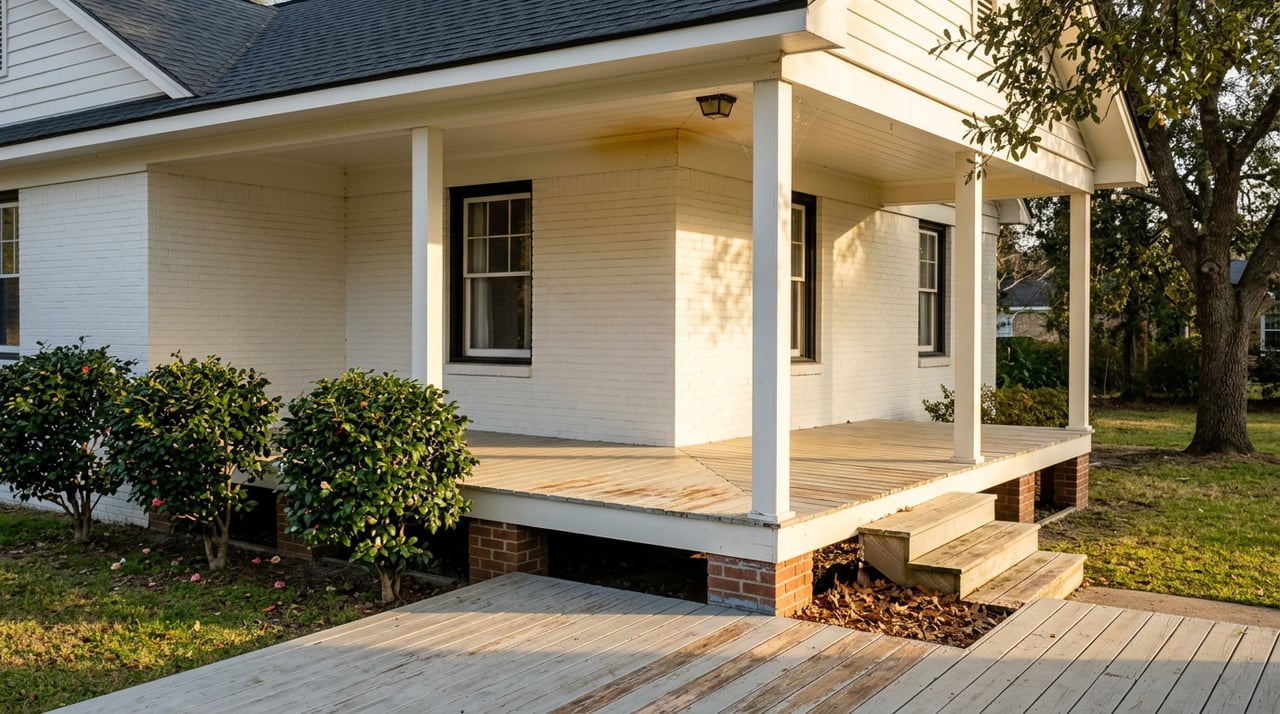
A house in Monroe's Garden District sells itself before you ever call an agent. Ceilings that clear nine feet, a wraparound porch shaded by seventy-year-old oaks, original hardwood under three coats of polyurethane. Somewhere in that walkthrough, a buyer usually asks about the tax credit. They've heard the neighborhood is on the National Register of Historic Places, and they assume that designation comes with a check from the state for fixing up their new front porch.
It doesn't. Not for a house they plan to live in.
That gap between what buyers expect from "historic" status and what the law actually pays for is the single most common misunderstanding I run into with Garden District purchases. It's worth untangling before you write an offer, because it changes how you should budget for the renovation you're already picturing.
The Garden District earned its National Register listing in 1996, recognizing more than 600 structures spanning Colonial and Georgian Revival, Spanish Mission, English Cottage, and Bungalow styles. The neighborhood grew in three distinct waves: an initial 1891 development, a second push in 1908, and a third after oil was discovered in the nearby Monroe Gas and Oil Field in 1916. That layered history is exactly what gives the district its character, and it's why so many listings lean hard on the word "historic" in their marketing copy.
Louisiana does offer a real rehabilitation tax credit for structures that contribute to a National Register district like this one. Under Louisiana law, the credit currently equals 25 percent of eligible rehabilitation costs, rising to 35 percent in rural parishes. That's a meaningful number on a $60,000 kitchen and bath renovation.
Here's the catch. According to Steeg Law, that credit is written for income-producing property, not the house you're planning to live in.
| Property use | Eligible for state historic tax credit? |
|---|---|
| Owner-occupied personal residence | No |
| Long-term rental property | Yes, if it meets program requirements |
| Other income-producing use | Yes, if it meets program requirements |
The Preservation Resource Center of New Orleans puts it plainly: there is currently no owner-occupied residential credit. If you're buying the house to live in, the 25 to 35 percent credit isn't part of your math, no matter how many times a listing mentions it.
This matters because I've seen listing descriptions in the Garden District that raise the tax credit as a selling point without clarifying that distinction. It's not dishonest so much as incomplete. The credit is real. It just applies to a different buyer than the one reading a listing for a single-family home.
There's a second layer to this that trips people up even when they already know the credit is use-restricted. Getting exterior work approved by a local historic district commission is a separate process from getting a project certified for the state or federal tax credit. Approval from a local commission on your porch rebuild or window replacement doesn't automatically mean the Louisiana Division of Historic Preservation or the National Park Service will sign off on the same work for credit purposes.
If you're the kind of buyer this credit does apply to, someone planning to convert a Garden District property into a rental or an income-producing space, you'll want to loop in the state's Division of Historic Preservation before you start swinging hammers, not after. Their standards for what counts as a qualifying rehabilitation are more specific than most contractors assume, and retrofitting a completed project to meet them after the fact is expensive and sometimes impossible.
While buyers are asking about tax credits, the question that should come first is almost never asked: what's holding the house up.
Most of the housing stock in this part of Monroe, built between the 1900s and the 1960s, sits on pier and beam foundations rather than modern concrete slabs. That's not a defect. It's simply how homes in this era and this soil were built, and it comes with a maintenance profile that's different from what a buyer moving from a 2015 subdivision slab home might expect.
Northeast Louisiana sits on expansive clay soil, the kind that swells when it absorbs moisture and shrinks when it dries out. That cycle, repeated across a century, is what causes the classic signs of movement in an older pier and beam home:
None of this means walk away from the house. It means budget differently than you would for new construction. A pier and beam foundation is also, in a lot of ways, more forgiving to work on than a slab, since a contractor can access the crawl space directly to shim, releveled, or replace individual piers without breaking concrete. But that access is only useful if someone actually inspects it before closing, not after you've moved in and noticed the bedroom door won't latch anymore.
If you're the kind of buyer with a builder's eye, or you're working with someone who is, this is where a pre-offer walkthrough earns its keep. Grading around the foundation, gutter discharge points, and crawl space ventilation tell you more about the next ten years of ownership than the crown molding does.
None of this is a case against buying here. The Garden District's appeal is real and it's specific.
Forsythe Park anchors the neighborhood, with a nine-hole public course at Johnny Myers Golf Course, tennis and pickleball courts including clay surfaces that are unusual to find on a public court anywhere, and enough shade from mature oaks to make a Saturday walk feel like an event rather than an errand. Across the street, the Biedenharn Museum and Gardens houses a Coca-Cola museum tied to the district's own history as the site of the first Coke bottling operation, along with a collection of rare Bibles that draws repeat visits from local history buffs. Down the block, the Gothic Revival Grace Episcopal Church, built in 1925, adds another layer of the architectural texture that makes this part of Monroe feel distinct from anywhere else in the parish.
The small commercial strip near Louisville Avenue rounds it out. Okaloosa's patio fills up for weekend brunch. Enoch's Pub and Grill draws a crowd for live music and a burger topped with Guinness gravy. Genusa's Italian, with its exposed brick dining room, is popular enough that reservations are recommended. Woodstock Monroe and a handful of small shops give the district the kind of walkable, small-town commercial feel that's genuinely rare inside a city limit.
That's what sells the house on the first walkthrough. The tax credit question and the foundation question are what determine whether the purchase still feels like a good decision three years later.
If you're seriously considering a contributing property in the Garden District, a few things are worth confirming before you're under contract:
Does buying a contributing property mean I can't renovate the house the way I want? The specifics depend on the work you're considering, so confirm with the local commission before finalizing plans.
Is a pier and beam foundation automatically a red flag? No. It's the standard foundation type for homes of this era in this soil, and a well-maintained one can last generations. What matters is whether it's been maintained, not which type it is.
Buying in the Garden District rewards buyers who separate what they love about the neighborhood from what they're actually financing. If you want a second set of eyes on a specific listing, or you're trying to figure out what a renovation budget should realistically look like before you write an offer, John Michael Sampognaro is glad to walk through it with you. Let's Connect.
This article is general information, not legal, tax or financial advice. Consult a qualified professional about your situation.
Stay up to date on the latest real estate trends.


John Michael Sampognaro is dedicated to helping you find your dream home and assisting with any selling needs you may have. Contact today to start your home searching journey!